Storm Cloud Embroidery
First Impression: Bold, Playful, and Unapologetically Dramatic
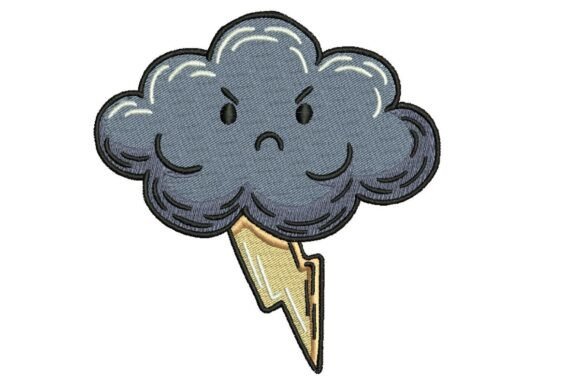
When I opened Storm Cloud Embroidery for the first time, I didn’t just see a cloud—I felt weather shifting. It’s not a fluffy cumulus or a soft rain cloud; it’s an *angry* storm cloud, low and brooding, with a lightning bolt that slices through the composition like a punctuation mark. The shape is compact but dynamic—wide enough to read clearly at 3–4 inches, yet tight enough to avoid overwhelming smaller items. There’s no text, no extra elements—just focused visual storytelling. That makes it unusually versatile: it reads as whimsical on a baby onesie, edgy on a teen sweatshirt, and artful on a linen tea towel. For nursery projects especially, it sidesteps cliché (no smiling suns or pastel rainbows) while keeping warmth through its confident silhouette.
A Real-World Test: Custom Tote Bags for a Local Kids’ Boutique
Last month, I used Storm Cloud Embroidery on a batch of organic cotton tote bags for a small shop specializing in handmade nursery goods. We stitched it centered on the front panel, sized to 3.8 inches wide. On light fabric, the contrast popped beautifully—even with mid-weight embroidery thread, the fill stitch held definition without looking muddy. The lightning bolt’s sharp angles stayed crisp, and the cloud’s curved edges softened just enough to feel hand-drawn, not digital. Customers responded immediately: parents loved the “not-too-cute” energy, and gift buyers called it “unexpected but comforting”—a rare combo. It elevated the tote from functional to collectible, which matters when you’re pricing handmade products at $42 instead of $28.
Where It Shines—and Where It Needs Care
Storm Cloud Embroidery excels in custom apparel and embroidered patch work, especially on stable, medium-weight fabrics like cotton twill, brushed poly-cotton blends, and medium-weave linen. It holds up well on sweatshirt embroidery (tested on fleece-backed French terry) when paired with cutaway stabilizer—no puckering, even across seams. As a tote bag design or pillow cover motif, it adds instant personality without demanding complex placement.
But here’s where attention matters:
- Small hoop sizes: Below 3 inches, the lightning bolt starts losing impact—the fine tip blurs. If you’re stitching caps or curved surfaces, size up or simplify manually.
- Thin or stretchy fabric: On lightweight jersey or bamboo knits, the fill stitch density can cause distortion. Use tear-away + topping, and reduce density if your machine allows.
- Dark fabric: The design relies on shape and contrast—not color. It works on navy or charcoal, but test thread colors carefully. A metallic silver or bright white thread lifts the lightning; a matte charcoal thread on black fabric disappears entirely.
- Frequent washing: Not ideal for baby embroidery meant for daily wear unless you reinforce backing and trim threads tightly. Better suited for nursery decor (wall hangings, framed hoops) than everyday onesies.
Design Integrity Meets Commercial Practicality
As an embroidery designer reviewing Storm Cloud Embroidery for client work and craft business use, I pay close attention to how it affects perceived value. This isn’t background filler—it’s a statement. When stitched cleanly, it signals intentionality: the maker chose something expressive, not generic. That builds customer trust, especially for Etsy sellers positioning themselves as curated, not mass-produced. Buyers notice the difference between a stock cloud and this one—the subtle asymmetry in the cloud’s outline, the lightning’s slight tilt, the balance between boldness and restraint.
For holiday embroidery or personalized gifts, it adds narrative weight. Imagine it on a wool-blend blanket gifted to a new parent: “Weathering the storm together” becomes quietly resonant. As part of boutique branding, it pairs well with minimalist typography or hand-lettered tags—never competing, always complementing.
Practical Designer Notes Before You Stitch
Before committing to Storm Cloud Embroidery in your next embroidery project, do these five things:
- Test on scrap fabric—same type and weight as your final piece, with the same stabilizer combo.
- Check thread color contrast in natural light, not just on screen. What looks vibrant in your embroidery software may mute on fabric.
- Review stitch density—if the file includes dense fill areas near the cloud’s base, consider reducing density by 5–10% for breathable fabrics.
- Confirm hoop size compatibility—this design fits comfortably in a 4×4 hoop, but verify your version’s exact dimensions before digitizing for production.
- Inspect small details—zoom in on the lightning tip and cloud edge in your embroidery software. If corners look jagged or stitches are overly sparse, it may need cleanup before commercial use.
Also: test it in black-and-white mockups. Does it retain character without color? (It does.) Compare light and dark fabric backgrounds side-by-side. And always confirm licensing—Storm Cloud Embroidery is marketed for machine embroidery use, but if you plan to sell finished products or include it in digital design assets, verify commercial rights directly with the source.
Final Thought: A Design That Earns Its Place
Storm Cloud Embroidery doesn’t beg for attention—it commands it thoughtfully. It’s not for every project, but when it lands right—in a custom embroidered patch, a boutique sweatshirt, or a standout nursery decor piece—it adds authenticity, charm, and quiet confidence. For craft business owners and designers who care about how their work feels in someone’s hands (not just how it looks online), this is the kind of embroidery file that turns a good idea into a meaningful finished product. Just remember: respect the fabric, honor the detail, and let the storm speak for itself.